

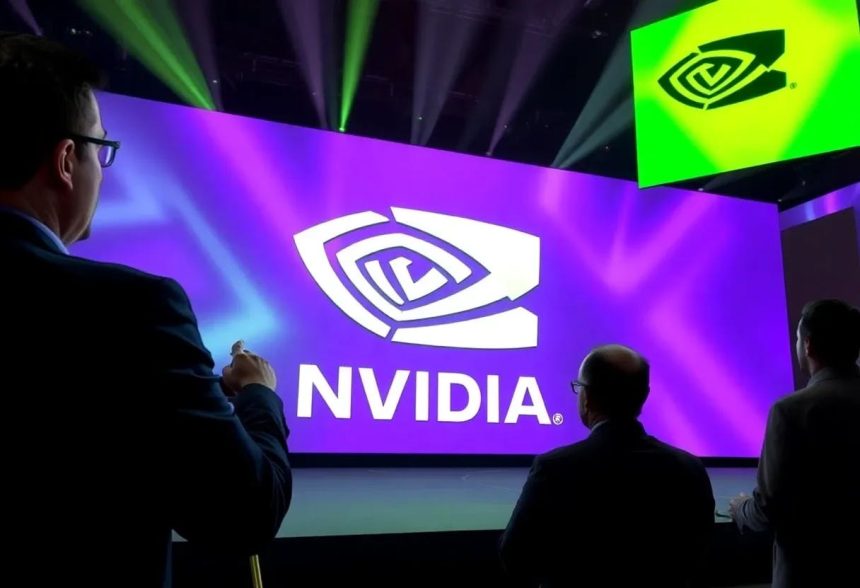
Well, folks, it happened. Nvidia didn’t just break records; it shattered them, vaulting to a staggering $5 trillion valuation. Forget your usual quarterly earnings reports and investor calls; this isn’t just another ticker symbol climbing the charts. According to our esteemed intel, this is less about financial ledger entries and more about a seismic shift in the very fabric of our tech-driven world.
We’re not just witnessing financial history; we’re observing a cultural metamorphosis. The “AI era” – a phrase often tossed around with varying degrees of enthusiasm and existential dread – now has its undeniable, first-ever trillion-dollar emperor. And who wears the crown? None other than Jensen Huang. Gone are the days when he was simply the “chip guy.” Oh no, dear readers. He’s officially upgraded to “Tech Thanos.”
Now, let’s chew on that “Tech Thanos” moniker for a moment. It’s certainly a catchy headline, isn’t it? But what does it truly signify? Is it a nod to the sheer, unyielding power Nvidia now wields in shaping the future of artificial intelligence? A recognition of their seemingly inevitable dominance, perhaps snapping their fingers to reshape industries at will? Or is it a more subtle, perhaps even cautionary, allusion to the kind of singular, overwhelming force that dictates the destiny of entire digital universes?
This isn’t just about silicon and software anymore. Nvidia’s colossal valuation isn’t merely a testament to impressive quarterly growth; it’s a barometer of where our technological zeitgeist is heading. It suggests that AI isn’t just a niche application or a future promise; it’s the present, and Nvidia is building the infrastructure that fuels it, from data centers to autonomous systems. When a company reaches this stratospheric height, especially one so deeply embedded in the foundational technology of AI, it forces us to ask bigger questions.
So, as we observe the rise of this “trillion-dollar emperor” and his transformation into “Tech Thanos,” one must ponder: What does such concentrated power mean for innovation, competition, and ultimately, the direction of the AI era itself?




![Clean Code: Functions and Error Handling in Go: From Chaos to Clarity [Part 1]](https://techtonic.xpansieve.com.ng/wp-content/uploads/2025/10/Clean-Code-Functions-and-Error-Handling-in-Go-From-Chaos-150x150.png)


