

Unveiling Meta’s Massive Bet: Data Centers, AI, and the Soaring Costs of Tomorrow
In the ever-accelerating race for technological dominance, news that Zuckerberg plans massive data center expansion and higher 2026 capital costs sends a clear, resounding message across the tech landscape. While specific details of the expansion remain under wraps, the very announcement speaks volumes about Meta’s strategic direction and its unwavering commitment to the future of AI and immersive digital experiences.
What Does a “Massive Data Center Expansion” Really Mean?
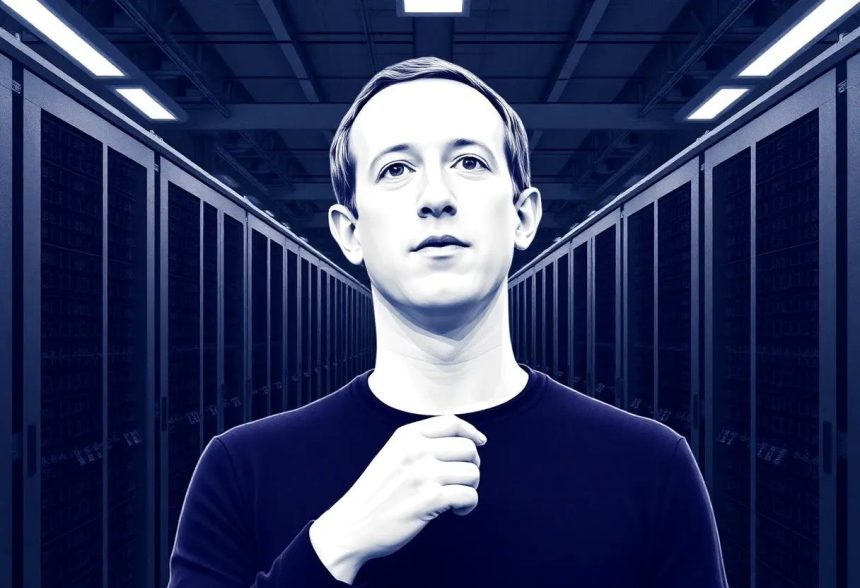
For many, the term “data center” might conjure images of generic server rooms. But in reality, these are the colossal, unseen factories of the digital age. A massive expansion signifies:
- More Processing Power: At its core, it means significantly increased capacity to compute, process, and store vast amounts of data. Think of it as building more brains for Meta’s global operations.
- Fueling AI Innovation: Artificial intelligence models, especially the cutting-edge large language models (LLMs) and generative AI, require immense computational resources. This expansion is a direct investment in the infrastructure needed to train, refine, and deploy more sophisticated AI across Meta’s platforms.
- Powering the Metaverse Vision: While the metaverse is a long-term play, rendering immersive virtual worlds, handling real-time interactions for millions, and supporting complex avatars demands a distributed, low-latency computing backbone that only vast data centers can provide.
- Global Reach and Resilience: Expanding data centers often involves building new facilities in various geographic locations, enhancing service reliability, reducing latency for users worldwide, and bolstering overall network resilience.
Decoding “Higher 2026 Capital Costs”
The mention of higher 2026 capital costs is particularly insightful. “Capital costs” refers to the money a company spends to acquire, upgrade, and maintain physical assets such as buildings, machinery, and equipment – in this case, data centers, servers, and cooling systems. The projection for 2026 indicates:
- Sustained, Long-Term Investment: This isn’t a one-off expenditure; it’s a commitment to continuous, heavy investment in foundational infrastructure for years to come. It suggests Meta views these investments as critical for its long-term growth and competitive edge.
- Confidence in Future Growth: Companies typically only project higher capital costs when they anticipate significant future demand for their services or believe these investments will yield substantial returns. Meta is betting big on the future success of its AI and metaverse initiatives.
- The Cost of Innovation: Building and maintaining state-of-the-art data centers, especially those equipped for advanced AI, is incredibly expensive. It involves massive energy consumption, complex cooling systems, and the acquisition of cutting-edge hardware.
The Real-World Implications
This strategic move by Meta isn’t just about silicon and servers; it has profound implications for users, investors, and the wider tech ecosystem:
- For Users: Expect faster, more intelligent features across Facebook, Instagram, WhatsApp, and potentially more seamless, responsive metaverse experiences in the future. Better AI could mean anything from improved content recommendations to more sophisticated virtual assistants.
- For Meta’s Strategy: This signals a strong doubling down on AI as a core pillar of its future, likely integrating advanced AI more deeply into all its products and services. It also reinforces the long-term, capital-intensive nature of its metaverse aspirations.
- For the Tech Industry: Meta’s aggressive investment could spur competitors to similarly ramp up their infrastructure, intensifying the AI race and potentially accelerating technological advancements across the board. It also highlights the growing importance of physical infrastructure in a digital world.
While the specifics of Meta’s expansion are still emerging, the headline alone serves as a powerful indicator. It tells us that Meta is not just building software; it’s laying the physical groundwork for the next generation of digital interaction and artificial intelligence.




![Clean Code: Functions and Error Handling in Go: From Chaos to Clarity [Part 1]](https://techtonic.xpansieve.com.ng/wp-content/uploads/2025/10/Clean-Code-Functions-and-Error-Handling-in-Go-From-Chaos-150x150.png)


