

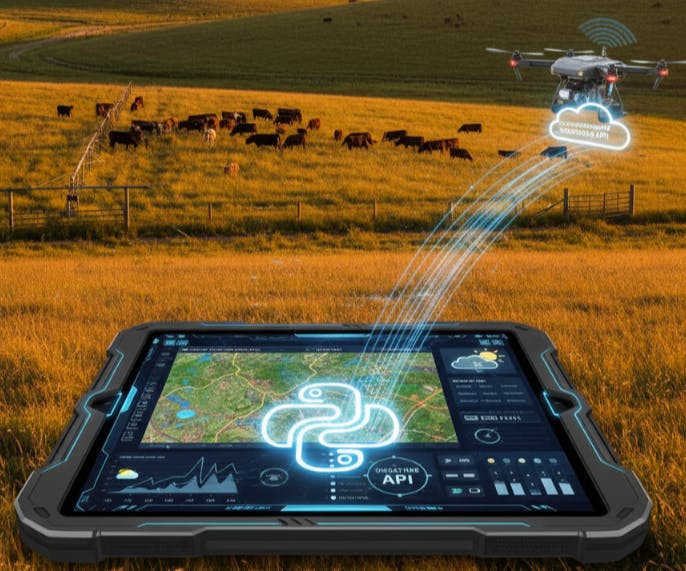
From Pasture to Profit: How Data is Redefining Ranching
In the vast, often unforgiving world of ranching, success isn’t just about hard work and grit; it’s increasingly about razor-thin margins and navigating the unpredictable whims of nature. For generations, cattle ranchers have relied on instinct, experience, and maybe a little bit of prayer to manage their herds and their bottom line. But what if the wisdom of the old West could meet the calculating power of modern tech? What if Python, web scraping, and government APIs could transform gut feelings into data-driven decisions?
Enter the “Data-Driven Ranching Assistant,” a prototype that doesn’t just whisper sweet nothings to cattle, but crunches numbers to ensure their well-being and the rancher’s solvency. This isn’t about replacing the cowboy; it’s about arming them with a digital lasso for a new era of agricultural efficiency.
Module 1: The Economic Engine – Foraging for Fiscal Fortunes
The first challenge for any rancher is simple yet complex: “How do I feed my herd as cheaply as possible, without sacrificing nutrition?” This isn’t a question you can answer with a shrug and a guess. It requires science, and crucially, real-time economics.
Translating Bovine Science into Binary Brilliance
Before you can optimize costs, you need to know demand. The project’s architect dove deep into agricultural science, translating complex formulas for “Dry Matter Intake” (DMI) into Python code. This isn’t just a simple calorie count; it’s a sophisticated calculation that considers a cow’s weight, stage of life (is she lactating? growing? pregnant?), and even milk production. Imagine taking decades of peer-reviewed research and condensing it into a script that, given a few inputs, accurately determines exactly how much feed your entire herd needs for a given period. It’s scientific demand forecasting, but for four-legged consumers.
The Digital Hay Bales: Web Scraping for Real-Time Rates
Knowing what your cattle need is one thing; knowing where to buy it for the best price is another. Feed prices, like Texas weather, can change on a dime. Relying on outdated price lists is a sure way to eat into those already “razor-thin margins.” This is where web scraping becomes a rancher’s superpower. A Python script was developed to comb through local feed store websites, pulling product names and, more importantly, current prices. This transforms static web pages into a dynamic database, allowing the rancher to compare options, identify the most cost-effective feed, and make purchasing decisions based on actual market rates. It’s turning browser tabs into budget trackers.
Module 2: The Environmental Monitor – Tapping into the Weather Wisdom
Feed costs are only part of the equation. A healthy, productive herd depends heavily on its environment. Extreme heat, in particular, is a silent enemy, reducing milk production, impacting fertility, and causing a significant drop in feed intake. To combat this, the ranching assistant needed to become a weather prophet.
The solution? The National Oceanic and Atmospheric Administration (NOAA) API. This isn’t just for predicting your picnic weather; it’s a treasure trove of high-quality, free environmental data from thousands of stations. The project utilized a Python script to tap into this public resource, fetching crucial data points like maximum and minimum temperatures, average relative humidity, and wind speed for specific local weather stations. This data is then saved, building a local historical record of environmental conditions – a digital logbook far more detailed than any cowboy ever kept.
The Next Frontier: Connecting the Pasture to the Cloud
While powerful on their own, the true genius of these modules lies in their eventual integration. Imagine a system where the environmental data isn’t just logged but actively informs the economic engine. This is where the Temperature-Humidity Index (THI) comes into play. THI is a recognized metric for cattle heat stress. As the THI climbs above a critical threshold, a cow’s DMI naturally drops. The next iteration of this assistant aims to dynamically adjust feed recommendations based on predicted heat stress.
This means if a heatwave is forecast, the system could predict a 10% decrease in feed intake. A rancher could then adjust their feed purchases accordingly, preventing waste and ensuring their herd receives appropriate nutrition, even under stress. It’s moving from reactive management to proactive foresight, optimizing not just for cost, but for animal welfare and long-term productivity.
What We Learned from the Digital Herd
- Public APIs are Goldmines: Government agencies, often overlooked, offer incredible troves of free, high-quality data. It’s a hugely underutilized resource for developers looking to build impactful, real-world applications.
- Web Scraping is the New Prospecting: When official APIs are scarce, a well-crafted web scraper can turn seemingly unstructured website data into actionable economic insights, making it an invaluable tool for small businesses and traditional industries.
- The Magic is in the Melding: The real power emerges not from isolated scripts, but from their synergy. Combining economic data with environmental intelligence creates a tool that doesn’t just solve problems but anticipates them, offering a holistic view that mirrors the complexities of the real world.
This project is more than just a proof of concept; it’s a testament to the transformative potential of data science in traditional industries. It challenges conventional wisdom, urging ranchers to look beyond the horizon for smarter, more sustainable ways to manage their operations. If Python can help optimize a ranch, what other industries are ripe for a digital revolution?




![Clean Code: Functions and Error Handling in Go: From Chaos to Clarity [Part 1]](https://techtonic.xpansieve.com.ng/wp-content/uploads/2025/10/Clean-Code-Functions-and-Error-Handling-in-Go-From-Chaos-150x150.png)


