

Alchemy of the Modern Age: Zhining Zhao’s Quest to Power America with Recycled Tech
In an era increasingly defined by rapid technological obsolescence and pressing environmental concerns, one visionary leader is challenging conventional wisdom. He argues that the true wellspring of future American innovation might not be found in pristine mines or advanced laboratories, but in our burgeoning heaps of electronic waste. Zhining Zhao, the tenacious founder of Andean, is spearheading a deeptech revolution, asserting that “waste is the key to U.S. technological power.”
His startup, Andean, is far more than a mere recycling company; it represents a strategic pivot in the landscape of national security and economic independence. By deploying advanced AI-powered refineries, Andean aims to meticulously reclaim vital metals from e-waste. This innovative approach directly addresses critical U.S. supply chain needs, drastically cutting production costs, and significantly reducing environmental emissions. It’s a bold vision, deeply rooted in a personal history of defying conventional thought, a journey that began with a censored school paper in Shanghai and now places him at the cutting edge of American deeptech.
The Unseen Goldmine: E-Waste as a Strategic Resource
The sheer volume of electronic waste generated globally is staggering, forming a veritable mountain of discarded devices. This “urban mine” contains everything from indispensable rare earth elements to precious metals like gold, silver, copper, and palladium. These materials are utterly indispensable for modern technology, powering everything from our ubiquitous smartphones and electric vehicles to advanced defense systems. Yet, the vast majority of this invaluable resource goes untapped, ending up in landfills where it pollutes the environment and represents a colossal missed economic opportunity.
For the United States, an increasing reliance on foreign sources for these critical materials poses significant geopolitical and economic vulnerabilities. Supply chain disruptions, often driven by international tensions, trade disputes, or cartel-like control, can cripple domestic industries and impede technological advancement. Zhao’s philosophy directly confronts this dependency, positioning e-waste as a domestic, renewable resource that can fortify America’s industrial base and ensure its technological sovereignty.
Andean’s AI-Powered Refineries: Precision and Prowess
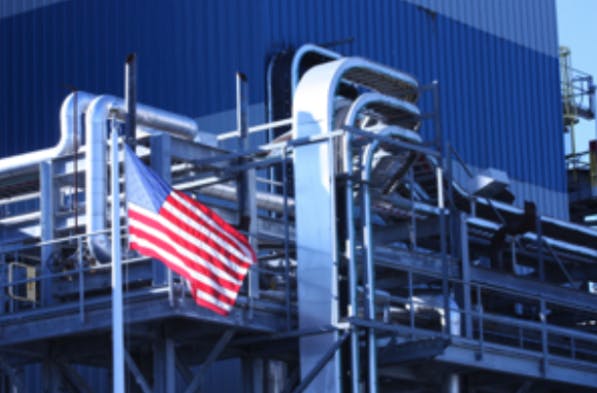
At the heart of Andean’s disruptive model are its state-of-the-art, AI-powered refineries. Unlike traditional, energy-intensive, and often less efficient recycling methods, Andean leverages artificial intelligence to bring unprecedented precision and scale to metal reclamation. Sophisticated AI algorithms are capable of identifying, sorting, and processing various complex electronic components with remarkable accuracy, thereby optimizing the extraction of valuable elements while simultaneously minimizing energy consumption and unwanted waste byproducts.
This technological leap translates into tangible, multifaceted benefits:
- Cost Reduction: By efficiently extracting metals from a readily available, often undervalued source, Andean can provide essential raw materials at a significantly lower cost than conventional mining operations.
- Emissions Reduction: The energy footprint and overall environmental impact of refining e-waste are substantially smaller than those associated with traditional mining and smelting, aligning perfectly with urgent global sustainability goals.
- Supply Chain Resilience: Establishing a robust, reliable domestic source of critical metals dramatically reduces reliance on volatile international markets and significantly strengthens the U.S. manufacturing sector’s stability.
- Technological Advancement: The continuous process of refining e-waste provides a rich feedback loop for material science and AI development, fostering an environment of perpetual innovation and improvement.
From Censorship to Deeptech Leadership: Zhining Zhao’s Journey
Zhining Zhao’s compelling path to founding Andean is as intriguing as his transformative vision. The mention of a “censored school paper in Shanghai” speaks volumes about his inherent drive to challenge established norms and relentlessly seek truth, even within restrictive environments. This formative early experience likely instilled in him a profound appreciation for open systems that facilitate innovation and unfettered inquiry, contrasting sharply with those that seek to suppress intellectual curiosity.
It paints a picture of a founder who is unafraid to examine complex problems from unconventional angles and relentlessly pursue solutions that others might dismiss as impractical, too ambitious, or overly complex. This unique blend of resilience and independent thought, honed through significant personal experience, is precisely what enabled him to transition from a student facing censorship to a pioneering leader in American deeptech, where the pursuit of complex, high-risk, high-reward solutions is the standard, not the exception.
A Blueprint for American Technological Supremacy
Zhao’s groundbreaking work at Andean is far more than just a business venture; it represents a strategic imperative for the United States. By ingeniously transforming what was once seen as an intractable problem—e-waste—into a formidable and valuable resource, Andean is laying the groundwork for a more self-reliant, sustainable, and technologically advanced America. This domestic resource stream has the potential to fuel next-generation industries, ranging from advanced electronics and robotics to critical renewable energy infrastructure, all without depleting virgin resources or depending on potentially volatile geopolitical rivals.
In essence, Zhining Zhao is advocating for a fundamental paradigm shift: viewing discarded systems not as failures, but as dormant potential waiting to be awakened. His remarkable journey and Andean’s ambitious mission underscore a powerful and often overlooked truth: sometimes, the most revolutionary advancements emerge from courageously re-evaluating what we have previously dismissed as mere waste.
Could embracing this circular economy model, powered by cutting-edge artificial intelligence, be the definitive strategy for the U.S. to secure its technological future and maintain its global leadership in the 21st century?




![Clean Code: Functions and Error Handling in Go: From Chaos to Clarity [Part 1]](https://techtonic.xpansieve.com.ng/wp-content/uploads/2025/10/Clean-Code-Functions-and-Error-Handling-in-Go-From-Chaos-150x150.png)


