By using this site, you agree to the Privacy Policy and Terms of Use.
Accept
Sign In
TechTonicTechTonicTechTonic
Notification Show More
Font ResizerAa
  • Home Technology
    • Home 2Hot
    • Home 3
    • Home 4
    • Home 5New
  • Technology
    Technology
    Modern technology has become a total phenomenon for civilization, the defining force of a new social order in which efficiency is no longer an option…
    Show More
    Top News
    Apple Jul Announcement: What a Refresh for Macbook
    Sponsored by
    Sponsored by
    Advantages and Disadvantages of Having Smartphone
    December 8, 2021
    Top 10 Best Portable Bluetooth Speakers for Summer Fun
    December 9, 2021
    Latest News
    The Invisible Architect: Why Human Thought Drives True Automation
    October 30, 2025
    The Groundhog Day of AI: When Your Automated Content Just Can’t Get It Together
    October 22, 2025
    Unmasking AI’s Blind Spot: Why “Later” Matters for Language Model Authority
    October 20, 2025
    Beyond the Brain Drain: Why Smart People Reuse Passwords and What Actually Works
    October 15, 2025
  • Gadget
    GadgetShow More
    The History and Future of CAD in Engineering
    From Drafting Boards to Digital Minds: The Transformative Journey of CAD and Its AI-Powered Horizon
    5 Min Read
    The Seven-Step Hostage Situation You Call Onboarding
    Investigating the Onboarding Blunder: When Helping Becomes a Hostage Situation
    12 Min Read
    Why Over-Caching Can Be Just as Bad as No Caching
    Beyond Optimization: Unmasking the Dangers of Excessive Caching
    9 Min Read
    Why SaaS Pricing Pages Fail
    Decoding Disappointment: An Investigation into SaaS Pricing Page Ineffectiveness
    10 Min Read
    Turning the Compiler Into Your Co-Architect
    Architecting Software with the Compiler: Enforcing Contracts Through Type Systems
    16 Min Read
  • Posts
    • Post Layouts
      • Standard 1
      • Standard 2
      • Standard 3
      • Standard 4
      • Standard 5
      • Standard 6
      • Standard 7
      • Standard 8
      • No Featured
    • Gallery Layouts
      • Layout 1
      • Layout 2
      • Layout 3
    • Video Layouts
      • Layout 1
      • Layout 2
    • Audio Layouts
      • Layout 1
      • Layout 2
      • Layout 3
    • Post Sidebar
      • Right Sidebar
      • Left Sidear
    • Content Features
      • Inline Mailchimp
      • Highlight Shares
      • Print Post
      • Inline Related
    • Auto Load Next Posts
    • Sponsored Post
  • Pages
    • Search Page
    • 404 Page
Reading: The Emperor’s New Unit Tests: Why LLMs Can’t Just ‘Poof!’ Out Perfect Code Checks
Share
TechTonicTechTonic
Font ResizerAa
  • Tech News
  • Gadget
  • Technology
  • Mobile
Search
  • Home
    • Home 1
    • Home 2
    • Home 3
    • Home 4
    • Home 5
  • Categories
    • Tech News
    • Gadget
    • Technology
    • Mobile
  • Bookmarks
  • More Foxiz
    • Sitemap
Have an existing account? Sign In
Follow US
  • Contact
  • Blog
  • Complaint
  • Advertise
© 2022 Foxiz News Network. Ruby Design Company. All Rights Reserved.
ai-code-generationai-code-reviewai-in-software-testingai-software-testingcode-qualityllm-unit-testingopenai-codexunit-testing

The Emperor’s New Unit Tests: Why LLMs Can’t Just ‘Poof!’ Out Perfect Code Checks

AgentKyles
Last updated: October 24, 2025 4:46 pm
AgentKyles
Share
The Limits of LLM-Generated Unit Tests
SHARE

Ah, the siren song of effortless automation! We’ve all seen those alluring prompts, “Write unit tests for utils/date.ts,” promising a world where our tireless AI companions simply conjure up robust test suites. And, for the most part, they deliver: tests compile, run, and often, miraculously, pass. A round of applause, everyone’s satisfied, right?

Contents
The Blueprint: Our Requirements for a Product ServiceThe Starting Line: Our ProductService & Its DocblockThe First Round: Naive LLM TestsInto the Crucible: Code Mutations!Case 1: The Flipped Empty ID ConditionCase 2: The Flipped Product Search ConditionCase 3: The Sneaky ‘Cost Price’ SwapThe ‘Context Is King’ Revelation: Single Coding SessionThe Unvarnished Truth: LLM Tests Are a Double-Edged Sword

But hold your horses, fellow code connoisseurs. This perceived paradise of automated testing raises a rather prickly question that keeps me up at night, pondering the digital abyss: are those tests actually any good?

Let’s strip back the layers of AI hype for a moment and revisit the foundational ‘why’ of unit testing. We craft these meticulous checks to validate our code against a predefined set of requirements. So, when we offload this task to an LLM, are we genuinely confident that our digital scribe is privy to all those intricate requirements?

If we simply toss the code into the AI’s gaping maw, it’s left with the code itself, maybe some inline documentation, and comments. Is that truly enough to grasp the nuanced intent behind every line? Or is it merely sophisticated pattern matching? To uncover the truth, we embarked on a little investigative journey with a simple set of requirements.

The Blueprint: Our Requirements for a Product Service

Imagine we’re building a new `ProductService` in PHP (though, as our research shows, the language is largely irrelevant to the conclusions). Here’s what this service absolutely must do:

  • Implement a `getProductPrice` method to fetch a product’s price by its ID.
  • If the provided `productId` is empty or just whitespace, it must throw an `EmptyProductIdException` with an error code of 0.
  • It should dutifully consult a `ProductRepository` to retrieve the product.
  • Should the `ProductRepository` come up empty-handed (i.e., product not found), an `ProductNotFoundException` with an error code of 1 should be thrown.
  • Finally, if all goes well, it simply returns the product’s price.
  • Our `Product` entity itself is a straightforward affair: ID, name, price, and, crucially, a ‘cost price’. Keep that last one in mind; it’s a bit of a trickster.

The Starting Line: Our ProductService & Its Docblock

Our `ProductService` was built to these specifications. Its `getProductPrice` method looked perfectly innocent, complete with a helpful docblock that explicitly stated its return type and the exceptions it might throw (including their error codes).

For instance, the method clearly expected to `return $product->getPrice();`. This documentation, you’d think, would be a golden compass for any test-generating entity.

The First Round: Naive LLM Tests

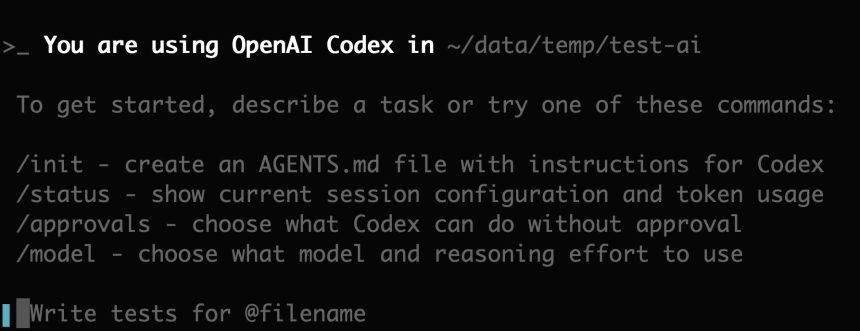
Armed with our pristine `ProductService`, we turned to OpenAI Codex (v0.25, GPT-5 high model) and posed the most straightforward of requests: “Write unit tests for all public methods of the ProductService.”

Codex, to its credit, delivered a seemingly solid suite: two tests for successful price retrieval (one even checking for ID trimming!), and two for the expected exceptions, diligently checking for the correct error codes and messages. It appeared to infer these details brilliantly from our docblock.

On the surface, these tests were impeccable. But here’s the rub: they only mirrored what was already explicitly laid out in the code and its comments. The real question lurked beneath: could these tests truly guard against deeper, more insidious coding blunders, the kind that might pass a superficial glance?

Into the Crucible: Code Mutations!

To really poke and prod at the LLM’s understanding, we decided to play mad scientist. We introduced deliberate “mutations” into our `ProductService` code. Each time, we wiped the slate clean, restarted Codex to purge any lingering context, and fired off the same innocent prompt: “Write unit tests for all public methods of the ProductService.”

Case 1: The Flipped Empty ID Condition

Our first sabotage involved subtly inverting the condition that checks for an empty product ID: instead of throwing an exception if the ID is empty, we made it throw if the ID is not empty. A classic “oops” moment.

Codex, bless its digital heart, was unfazed. It churned out tests that immediately flagged this logical inversion. Not only did it correctly identify the bug through its tests, but it even proposed the exact fix for the method! Chalk one up for obvious logical errors.

Case 2: The Flipped Product Search Condition

Next, we messed with the product search logic, flipping the condition that checks if the `ProductRepository` returned a product. Again, a simple logical inversion.

The outcome? Identical to Case 1. Codex saw right through our shenanigans, generated correct tests, and offered the appropriate fix. It seemed our LLM was a whiz at spotting when `if ($a === null)` accidentally became `if ($a !== null)`. Good to know it’s not entirely gullible.

Case 3: The Sneaky ‘Cost Price’ Swap

This is where things got juicy. Remember that `costPrice` we mentioned in the `Product` entity? We changed the `getProductPrice` method to return `return $product->getCostPrice();` instead of `return $product->getPrice();`.

And here’s the kicker: Codex generated tests that confirmed the mutated behavior! It happily asserted that the method now returned the cost price, not the actual price, even though our docblock explicitly stated the method’s purpose was to return the ‘price’. The LLM followed the flawed code like a loyal puppy, accepting the cost price as gospel. This, dear readers, was the bug that slipped through the cracks, a stark reminder that intent and documentation don’t always translate into LLM understanding.

The ‘Context Is King’ Revelation: Single Coding Session

Before drawing any harsh conclusions, we conducted a final, more nuanced experiment. What if the LLM had a deeper understanding of the initial requirements? This time, we asked Codex to write the code itself first, then generate the tests, all within a single, continuous session.

We fed it the initial requirements, and Codex dutifully produced a `ProductService` (though, interestingly, without the detailed docblock this time). It then generated a set of four correct unit tests, including the exception code checks.

Then, the moment of truth: we re-introduced our mutations within this same session, asking Codex to “Check whether tests for all public methods of ProductService still exist, and write them if they are missing.”

Remarkably, the game changed. Codex successfully handled the flipped conditions, automatically fixing the bugs and regenerating correct tests. And most tellingly, when we swapped `getPrice` for `getCostPrice`, Codex not only generated correct tests but also proactively fixed the `ProductService` code back to `return $product->getPrice();`!

This single-session run revealed a profound insight: an LLM, when given the full initial context of requirements and tasked with both code generation and testing, can indeed ‘remember’ and enforce those original requirements, acting as a more vigilant guardian against subtle business logic errors.

The Unvarnished Truth: LLM Tests Are a Double-Edged Sword

Our little experiment illustrates a crucial point: simply asking an LLM to “write tests” is often a naive gamble. While these AI-generated tests might compile and pass, they often merely mirror the existing code, warts and all. They’re fantastic at catching blatant logical inversions but can spectacularly miss the mark when the code deviates from complex, implicit business rules or explicit requirements not directly represented in code structure.

So, what’s a savvy developer to do?

  • Context, Context, Context: The more context you provide—be it inline comments, detailed documentation, or even verbose prompt engineering describing the requirements—the better your LLM’s chances. But don’t mistake “better” for “perfect.”
  • The Genesis Session: If your LLM writes the code, have it write the tests in the same session. This seems to imbue the AI with a deeper, more persistent understanding of the original requirements, allowing it to act as a more effective enforcer of intent.
  • Never Skip the Human Review: This is the golden rule. LLM-generated tests are a fantastic starting point, a potent productivity booster. But they are not a substitute for human intellect, domain knowledge, and that critical eye that spots what the machine cannot. Blindly committing AI-generated tests is a recipe for certifying bugs, not squashing them.

Ultimately, LLMs are powerful tools for the modern developer’s arsenal. But like any tool, they must be wielded with understanding and discretion. They can absolutely help you write tests faster, but without clear requirements and the invaluable human touch, they’ll simply certify the code you have, rather than the behavior you truly need. So, the next time your LLM proudly presents a shiny new test suite, ask yourself: is this truly bulletproof, or is it just the emperor’s latest fashionable, yet ultimately transparent, garment?


You Might Also Like

Architecting Excellence: Raghavendher Rao Santhapur’s Blueprint for Sustainable Mobile Development

Elevating Frontend Code Reviews: Moving Beyond Syntax to User Experience Excellence

OpenAI Codex CLI: A Glimpse into the AI-Powered Evolution of Development Workflows

Beyond the Stars: How AI-Driven Development Reshapes GitHub’s True Measures of Success

AI’s Code Conundrum: Accelerating Development or Scaling Fragility?

Sign Up For Daily Newsletter

Be keep up! Get the latest breaking news delivered straight to your inbox.
[mc4wp_form]
By signing up, you agree to our Terms of Use and acknowledge the data practices in our Privacy Policy. You may unsubscribe at any time.
Share This Article
Facebook Copy Link Print
Share
Previous Article Effective Credit Utilization in Vibe Coding Tools and Rate-Limited Platforms Unmasking the True Cost: Navigating Credit Burn in AI-Powered Vibe Coding Tools
Next Article The Lottery Ticket Hypothesis: Why Pruned Models Can Sometimes Learn Just as Well as Full Networks Unlocking AI’s Hidden Power: The “Lottery Ticket” Secret to Leaner, Smarter Networks
Leave a Comment

Leave a Reply Cancel reply

Your email address will not be published. Required fields are marked *

Stay Connected

248.1kLike
69.1kFollow
134kPin
54.3kFollow
banner banner
Create an Amazing Newspaper
Discover thousands of options, easy to customize layouts, one-click to import demo and much more.
Learn More

Latest News

Clean Code: Functions and Error Handling in Go: From Chaos to Clarity [Part 1]
Unmasking the Code Clutter: An Investigative Look into Go Functions and Error Handling Best Practices
backend best-practices clean-code clean-go-functions golang pass-code-review programming software-engineering
How Online Stores Know What You’ll Buy Next: The Math Behind “Frequently Bought Together”
The Algorithmic Oracle: Unpacking How E-commerce Predicts Your Next Purchase Ever feel like your favorite online store has a crystal ball, anticipating your desires before you even click ‘add to cart’? That eerie precision in suggesting “frequently bought together” items isn’t magic, dear reader, but a masterful application of data science, specifically something called Association Rule Mining. And trust me, it’s far more fascinating than any fortune teller. The core idea, stripped of its intimidating jargon, is elegantly simple: find patterns, then exploit them. Think of it as the digital equivalent of a savvy corner shop owner who knows that if you buy milk, you probably also need bread. Only, instead of one shop owner observing a few dozen customers, we’re talking about algorithms analyzing billions of transactions from millions of shoppers. The “If This, Then That” Goldmine At its heart, Association Rule Mining is about discovering “if-then” relationships within vast datasets. Computers sift through mountains of past purchase data to automatically identify rules like: “If a customer buys product A and product B, there’s an X% chance they’ll also buy product C.” These aren’t just guesses; they’re statistically significant insights derived from actual consumer behavior. This isn’t merely about throwing random suggestions at you. These algorithms employ metrics like ‘support’ (how often item sets appear together) and ‘confidence’ (how likely ‘if A’ leads to ‘then B’) to ensure the suggestions are not just correlations, but strong, reliable patterns. It’s about more than just popularity; it’s about *relationship*. From Digital Aisles to Physical Shelves The immediate application we all encounter is, of course, online. Those “Customers who bought this also bought…” or “Frequently bought together” sections on Amazon, eBay, or your local grocery delivery app? That’s Association Rule Mining in action, subtly nudging you towards complementary items, boosting the average order value for businesses, and, let’s be honest, sometimes genuinely reminding us we needed those batteries for the new gadget. But its genius isn’t confined to the digital realm. The same principles are used to optimize the physical layout of stores. Ever wondered why milk is often at the back of the supermarket, necessitating a trek past alluring displays? Or why chips and soda are frequently placed near each other? That’s often the result of this very analysis. It helps retailers organize shelves smarter, strategically placing items to maximize impulse purchases and enhance the shopping flow. Beyond the Cart: A Glimpse into the Algorithmic Future The implications of such pattern recognition extend far beyond retail. Imagine it being applied to: Healthcare: Identifying symptom patterns that frequently lead to specific diagnoses. Cybersecurity: Spotting sequences of network activities that often precede a security breach. Content Recommendations: Suggesting your next binge-watch based on your viewing history and what other similar viewers enjoyed. The ability of computers to find these hidden connections automatically from huge amounts of data empowers businesses and even other sectors to make better, more data-driven decisions. The Double-Edged Sword of Predictive Power While undoubtedly convenient, enhancing our shopping experience and making businesses more efficient, it’s worth pausing to consider the deeper implications. As these algorithms become more sophisticated, predicting our behavior with unsettling accuracy, we must ask ourselves: are these suggestions truly serving *our* best interests, or are they subtly guiding us down a pre-determined path to consume more? Are we trading true serendipity and discovery for optimized efficiency, potentially boxing ourselves into algorithmic echo chambers of preference? In a world increasingly shaped by these unseen rules, how do we ensure we remain the choosers, not just the chosen?
association-rule-mining ecommerce ecommerce-marketplace ecommerce-store frequently-bought-together item-recommendations machine-learning recommendation-algorithm
Own Your Edge: Control your AI
Beyond the Brink: Unpacking the 95% Failure Rate in Retail Edge AI and How to Own Your Edge
AI ai-edge-computing ai-infrastructure computer-vision-ai edge-ai edge-computing own-your-edge retail-ai
The Road to Hell is Paved with Good DRY Intentions
DRY Intentions, Wet Outcomes: Navigating the Over-Engineered Minefield in Software Development
design-patterns dry engineering hackernoon-top-story modular-reasoning modularity software-development yagni

You Might also Like

Clean Code and Speed: Not Either/Or
benchmarking-c++c++clean-codecode-optimizationcode-qualitymaintainability-vs-speedperformance-optimizationsimd-avx

The Myth of Sacrifice: Achieving Blazing Speed with Clean Code Principles

AgentKyles
AgentKyles
13 Min Read
AI-first Testing is a Dangerous Approach to Code Quality
AIai-driven-test-automationai-first-testingai-generated-codeai-testingtest-coveragetypescriptunit-testing

The AI Testing Mirage: Why Blindly Trusting Bots for Code Quality Imperils Your Software

AgentKyles
AgentKyles
19 Min Read
//

We influence 20 million users and is the number one business and technology news network on the planet

Quick Link

  • Contact
  • Blog
  • Complaint
  • Advertise

Support

Sign Up for Our Newsletter

Subscribe to our newsletter to get our newest articles instantly!

[mc4wp_form id=”1616″]

TechTonicTechTonic
Follow US
© 2022 Foxiz News Network. Ruby Design Company. All Rights Reserved.
Join Us!
Subscribe to our newsletter and never miss our latest news, podcasts etc..
[mc4wp_form]
Zero spam, Unsubscribe at any time.
Welcome Back!

Sign in to your account

Username or Email Address
Password

Lost your password?

