

Decoding Digital Urgency: What Travel Experiments Reveal About Scarcity’s Power
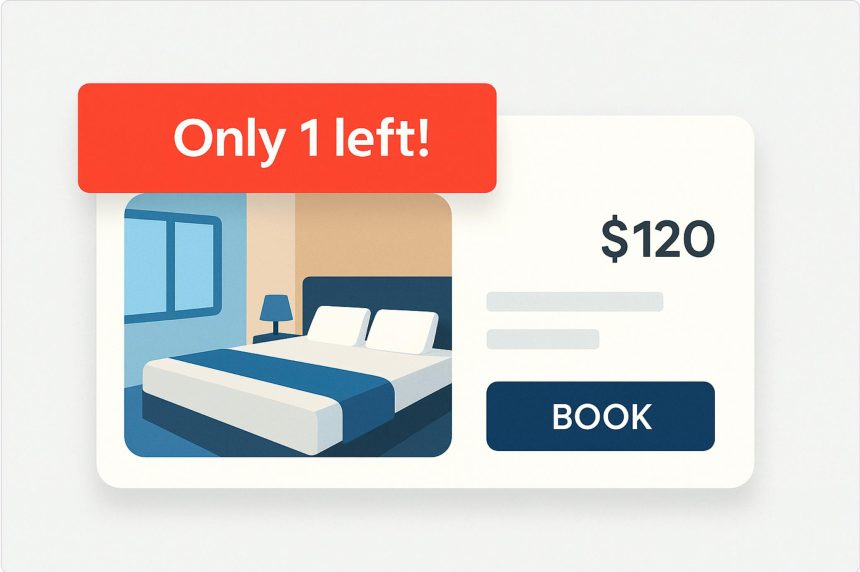
Have you ever felt a sudden urge to book that flight or hotel room when confronted with a message like “Only 1 room left!”? These seemingly simple prompts are powerful tools in the world of online travel, shaping our decisions in ways many of us don’t even realize. While we might logically think such messages don’t sway us, recent real-world experiments in user experience (UX) tell a fascinating and often surprising story.
The Unseen Hand of Psychology
Researchers have found that scarcity messages are remarkably effective at driving bookings. What’s truly intriguing is that this effectiveness often operates below our conscious awareness. When people are interviewed, they frequently assert that these urgent prompts have little to no impact on their purchasing choices. Yet, the cold, hard data from actual user behavior paints a very different picture. This disparity highlights a crucial lesson: in the battle between self-perception and underlying psychological triggers, psychology consistently emerges victorious.
Small Details, Big Influence
The impact of scarcity messages isn’t just about the words themselves. The experiments revealed that even tiny details, such as the color and precise wording used, can dramatically alter user behavior. For instance, urgency banners displayed in red significantly outperformed those in orange or green when it came to encouraging quick decisions. This isn’t merely a design preference; it speaks to the subconscious associations we have with different colors. Red, often linked with alerts or stop signs, instills a greater sense of immediate action, demonstrating how visual cues can amplify psychological effects.
The Ethical Balance: Urgency Without Manipulation
The profound influence of scarcity messages presents a unique challenge for product managers and designers. When used responsibly, these tools can genuinely benefit users by helping them make faster, more informed choices, especially in situations where availability is genuinely limited. They can streamline the decision-making process in a world brimming with options, leading to greater efficiency and satisfaction.
However, the line between helpful urgency and manipulative pressure is fine. Reckless application of scarcity tactics can swiftly erode user trust, leading to regretful purchases and damaged brand relationships. The true mastery in product management lies in finding that crucial ethical balance: harnessing urgency to facilitate conversions while ensuring that users feel empowered, not coerced, by their choices. It’s about inspiring action without resorting to manipulation, ensuring that every booking leaves the user feeling confident, not exploited.
As we navigate an increasingly digital landscape, understanding the subtle psychological levers that influence our decisions becomes ever more important. How might our online experiences evolve if both designers and consumers approached these powerful cues with greater awareness and ethical consideration?


![Clean Code: Functions and Error Handling in Go: From Chaos to Clarity [Part 1]](https://techtonic.xpansieve.com.ng/wp-content/uploads/2025/10/Clean-Code-Functions-and-Error-Handling-in-Go-From-Chaos-150x150.png)


