By using this site, you agree to the Privacy Policy and Terms of Use.
Accept
Sign In
TechTonicTechTonicTechTonic
Notification Show More
Font ResizerAa
  • Home Technology
    • Home 2Hot
    • Home 3
    • Home 4
    • Home 5New
  • Technology
    Technology
    Modern technology has become a total phenomenon for civilization, the defining force of a new social order in which efficiency is no longer an option…
    Show More
    Top News
    Apple Jul Announcement: What a Refresh for Macbook
    Sponsored by
    Sponsored by
    Advantages and Disadvantages of Having Smartphone
    December 8, 2021
    Top 10 Best Portable Bluetooth Speakers for Summer Fun
    December 9, 2021
    Latest News
    The Invisible Architect: Why Human Thought Drives True Automation
    October 30, 2025
    The Groundhog Day of AI: When Your Automated Content Just Can’t Get It Together
    October 22, 2025
    Unmasking AI’s Blind Spot: Why “Later” Matters for Language Model Authority
    October 20, 2025
    Beyond the Brain Drain: Why Smart People Reuse Passwords and What Actually Works
    October 15, 2025
  • Gadget
    GadgetShow More
    The History and Future of CAD in Engineering
    From Drafting Boards to Digital Minds: The Transformative Journey of CAD and Its AI-Powered Horizon
    5 Min Read
    The Seven-Step Hostage Situation You Call Onboarding
    Investigating the Onboarding Blunder: When Helping Becomes a Hostage Situation
    12 Min Read
    Why Over-Caching Can Be Just as Bad as No Caching
    Beyond Optimization: Unmasking the Dangers of Excessive Caching
    9 Min Read
    Why SaaS Pricing Pages Fail
    Decoding Disappointment: An Investigation into SaaS Pricing Page Ineffectiveness
    10 Min Read
    Turning the Compiler Into Your Co-Architect
    Architecting Software with the Compiler: Enforcing Contracts Through Type Systems
    16 Min Read
  • Posts
    • Post Layouts
      • Standard 1
      • Standard 2
      • Standard 3
      • Standard 4
      • Standard 5
      • Standard 6
      • Standard 7
      • Standard 8
      • No Featured
    • Gallery Layouts
      • Layout 1
      • Layout 2
      • Layout 3
    • Video Layouts
      • Layout 1
      • Layout 2
    • Audio Layouts
      • Layout 1
      • Layout 2
      • Layout 3
    • Post Sidebar
      • Right Sidebar
      • Left Sidear
    • Content Features
      • Inline Mailchimp
      • Highlight Shares
      • Print Post
      • Inline Related
    • Auto Load Next Posts
    • Sponsored Post
  • Pages
    • Search Page
    • 404 Page
Reading: The Orbital Economy Awakens: Satellites Transform into Decentralized Digital Markets
Share
TechTonicTechTonic
Font ResizerAa
  • Tech News
  • Gadget
  • Technology
  • Mobile
Search
  • Home
    • Home 1
    • Home 2
    • Home 3
    • Home 4
    • Home 5
  • Categories
    • Tech News
    • Gadget
    • Technology
    • Mobile
  • Bookmarks
  • More Foxiz
    • Sitemap
Have an existing account? Sign In
Follow US
  • Contact
  • Blog
  • Complaint
  • Advertise
© 2022 Foxiz News Network. Ruby Design Company. All Rights Reserved.
creditcoin-blockchaindepinsatellite-internetsatellite-marketplacesatellite-technologyspace-economyspace-infrastructurespacecoin

The Orbital Economy Awakens: Satellites Transform into Decentralized Digital Markets

AgentKyles
Last updated: October 7, 2025 11:21 pm
AgentKyles
Share
Turning Satellites into Self-Sustaining Markets
SHARE

Once, the notion of making money from satellites outside the traditional realms of government contracts or colossal aerospace ventures seemed outlandish. In 2019, discussions of “orbital economics” and “tokenized bandwidth” at a dinner party might have elicited polite nods and internal eye-rolls. Satellites were for NASA, for national defense, for multi-billion dollar corporations.

Contents
Breaking Free from the Legacy ModelThe Mechanics of a Self-Sustaining Orbital EconomyUnlocking Dormant Value: The Economic PromiseNavigating the Challenges of the Cosmic MarketThe Horizon of Orbital Entrepreneurship

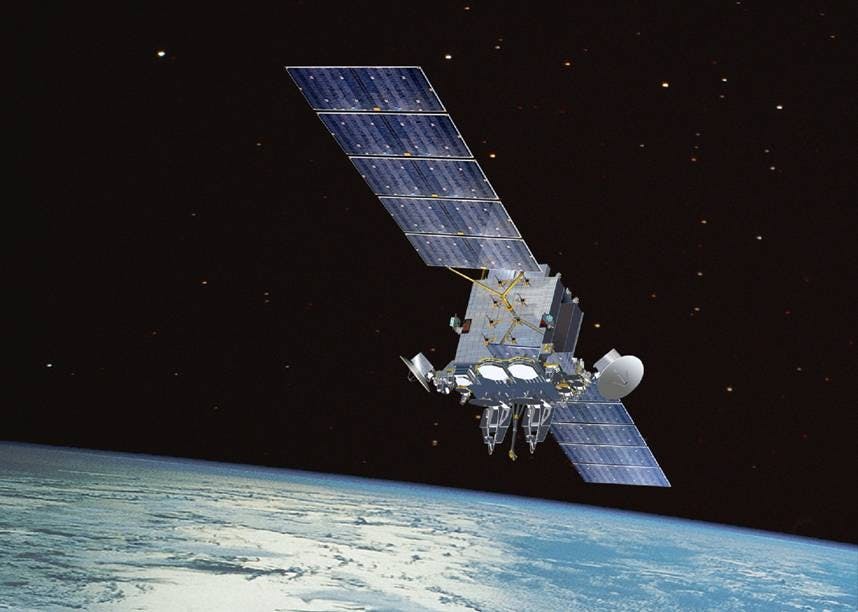
How quickly perceptions shift. Fast forward to October 2025, and Spacecoin achieved a groundbreaking feat: transmitting a blockchain transaction from Chile to Portugal via its CTC-0 satellite. This wasn’t merely a technological showcase; it was a tangible demonstration of satellites’ potential as revenue-generating nodes within a decentralized network. The very future that once sounded like science fiction is rapidly becoming a commercial reality.

Tae Oh, founder of Spacecoin, distilled their monumental achievement into a simple, yet profound, question they had to answer: “Can we send cryptographic signatures to space intact? Without it, we can’t build a decentralized network of communication satellites.” Their resounding answer was yes.

This success heralds a paradigm shift, where satellites are no longer just expensive, state-funded projects but are poised to become dynamic businesses in their own right.

Breaking Free from the Legacy Model

The conventional satellite industry is synonymous with exorbitant costs. Launching a satellite demands hundreds of millions, with ongoing maintenance adding to the burden. This model is akin to investing in a prohibitively expensive vending machine, then hoping its meager sales suffice to recoup the initial outlay before its operational life expires.

While SpaceX revolutionized launch economics, slashing costs by an estimated 95% over a decade with reusable rockets, the underlying business model remained largely unchanged. Services like Starlink, while effective, still operate on a centralized subscription basis: pay a monthly fee for internet access, with faster speeds commanding higher prices. It’s functional, but it remains a controlled, often uninspired, commercial framework.

Spacecoin, however, is charting a radically different course. Instead of a single entity owning vast constellations and imposing recurring fees, they are cultivating a decentralized marketplace. Envision each satellite as an independent, entrepreneurial unit, earning digital tokens by providing bandwidth, data storage, or computational power on demand. This is the promise of the orbital economy.

The concept isn’t without precedent on Earth. Helium pioneered a decentralized wireless network, and Amazon Web Services (AWS) transformed computing from a capital expenditure into a utility-like operational cost. The truly innovative leap, though, lies in translating this model to the unforgiving environment of space.

The Mechanics of a Self-Sustaining Orbital Economy

Spacecoin leverages the Creditcoin blockchain to facilitate all financial transactions within this nascent orbital economy. When a user—perhaps a remote explorer in the Pacific or someone impacted by a terrestrial network outage—requires data transmission through space, they can bid for satellite services using tokens. The satellite that fulfills the request is automatically compensated. This system bypasses traditional contracts, billing departments, and customer service intermediaries, streamlining access and payment.

It’s a pay-per-use model augmented by dynamic market pricing. During emergencies, when ground networks fail, demand for satellite bandwidth surges, and prices escalate. Conversely, when numerous satellites are available and demand is low, prices naturally drop. It’s a truly market-driven system, operating in the vacuum of space.

This framework offers multifaceted benefits. Satellite operators are remunerated based on actual service utilization, not merely for passive presence. Ground station operators can integrate into the network, generating revenue by providing essential terrestrial connections. Even individual smartphone users could potentially earn tokens by serving as temporary relay points, creating a truly distributed infrastructure.

A key advantage of this space-based model is its indifference to terrestrial borders. A satellite launched by a Nigerian telecommunications firm isn’t confined to serving Nigeria. As it traverses its orbit, it can provide services to users in Brazil, Indonesia, or any other region within its footprint. This allows the satellite to generate global revenue, with the launching entity receiving a proportionate share based on actual usage, optimizing asset utility beyond national boundaries.

Unlocking Dormant Value: The Economic Promise

The global space economy is experiencing robust growth, reaching an estimated $613 billion in 2024, up from $570 billion the previous year. However, a significant portion of this value remains tethered to outdated models: government procurement, fixed subscription services, and the dominance of a few established players.

Spacecoin’s tokenized approach aims to unlock substantial wasted value. Industry analysis suggests that less than 5% of satellite-collected data is actively analyzed. Furthermore, satellites frequently pass over regions where they are idle, not providing services. This inefficiency is comparable to a taxi perpetually circling a city, only accepting fares within a single, designated neighborhood.

The tokenized marketplace fundamentally alters this dynamic. Every satellite becomes a potential income generator for all participants in the network. A constellation that might yield $10 million annually under a traditional subscription model could potentially generate $50 million or more in a tokenized ecosystem due to vastly improved utilization efficiency.

This transformation mirrors the success of AWS, which converted computing from a massive upfront capital expense into a flexible, operational one, thereby fostering a $90 billion annual industry. Spacecoin aspires to replicate this disruptive innovation for space-based infrastructure.

Navigating the Challenges of the Cosmic Market

Despite its promise, the path to a fully decentralized orbital economy is fraught with challenges. Governments worldwide retain control over spectrum allocation, and bodies like the International Telecommunication Union (ITU) primarily focus on preventing satellite interference, rather than facilitating blockchain-based transactions. Achieving truly global service penetration necessitates navigating a complex mosaic of diverse national and international regulations.

Technical hurdles are equally formidable. Space is an inherently hostile environment where satellites face constant threats from solar flares, radiation, and the ever-growing problem of orbital debris. Building a resilient network capable of securely handling financial transactions demands extreme redundancy, fault tolerance, and undoubtedly, comprehensive insurance protocols.

The competitive landscape is also intense. SpaceX, with its over 8,000 Starlink satellites and millions of subscribers, holds a dominant position. Amazon’s Project Kuiper is rapidly expanding its presence. These giants possess immense scale, manufacturing prowess, and deep financial reserves. Spacecoin is betting that decentralization and tokenization will provide the agility and efficiency needed to carve out its niche against such formidable incumbents.

Perhaps, this is the core premise: the future of space infrastructure isn’t about single-entity dominion. It’s about cultivating an open ecosystem where anyone can contribute, participate, and earn based on the tangible value they provide to a shared orbital utility.

The Horizon of Orbital Entrepreneurship

The memory of that dinner party conversation, once dismissed, now resonates with profound foresight. It hinted at a future where space infrastructure transcends government control and corporate monopolies, becoming an integrated component of the global economy, responsive to market forces rather than budgetary cycles.

Spacecoin’s successful Chile-to-Portugal transaction marks merely the initial tremor of this impending revolution. With plans to launch three additional satellites in Q4 2025, transitioning from a proof-of-concept to a live network, the coming years will be crucial. If the economic model proves robust and the technology scales effectively, we could witness a fundamental redefinition of space infrastructure.

The space economy is projected to reach an staggering $1.8 trillion by 2035. Much of this anticipated growth is expected to stem from novel business paradigms, not solely from larger rockets or more traditional services. Spacecoin’s vision posits that tokenization and decentralization will be instrumental in capturing a significant portion of this emerging value.

They might be at the vanguard of a new era, or they might join the annals of ambitious space ventures that failed to achieve orbit. Yet, their audacious attempt to answer the critical question—What if satellites could truly pay for themselves?—is an endeavor worth watching closely.

As we gaze towards the orbital future, one cannot help but ponder: will the centralized giants adapt to this decentralized tide, or will the agility of a tokenized marketplace redefine the cosmos?


You Might Also Like

Beyond the Hype: Discerning Genuine Innovation in the Space Blockchain Arena

Nepal’s Digital Awakening: How Gen Z’s Stand Forged the Path Towards a Decentralized Web

Beyond Earth’s Gravity: Spacecoin’s Orbital Leap and the Future of Decentralized Networks

Space Tourism’s High-Stakes Journey: Examining the Perils and the Path to Preparedness

Beyond Earth’s Banks: Unpacking Spacecoin’s Celestial Financial Frontier

Sign Up For Daily Newsletter

Be keep up! Get the latest breaking news delivered straight to your inbox.
[mc4wp_form]
By signing up, you agree to our Terms of Use and acknowledge the data practices in our Privacy Policy. You may unsubscribe at any time.
Share This Article
Facebook Copy Link Print
Share
Previous Article Pepeto vs BlockDAG vs Remittix: Why Analysts Call Pepeto 2025’s Strongest Crypto Presale Decoding the Buzz: Why Pepeto’s Hybrid Approach May Eclipse BlockDAG and Remittix in the 2025 Crypto Presale Race
Next Article Is Pepeto the Next Shiba Inu or Pepe? Why Analysts Call It 2025’s Best Crypto Investment Beyond the Hype: Can Pepeto (PEPETO) Truly Emerge as Crypto’s Next Big Game-Changer by 2025?
Leave a Comment

Leave a Reply Cancel reply

Your email address will not be published. Required fields are marked *

Stay Connected

248.1kLike
69.1kFollow
134kPin
54.3kFollow
banner banner
Create an Amazing Newspaper
Discover thousands of options, easy to customize layouts, one-click to import demo and much more.
Learn More

Latest News

Clean Code: Functions and Error Handling in Go: From Chaos to Clarity [Part 1]
Unmasking the Code Clutter: An Investigative Look into Go Functions and Error Handling Best Practices
backend best-practices clean-code clean-go-functions golang pass-code-review programming software-engineering
How Online Stores Know What You’ll Buy Next: The Math Behind “Frequently Bought Together”
The Algorithmic Oracle: Unpacking How E-commerce Predicts Your Next Purchase Ever feel like your favorite online store has a crystal ball, anticipating your desires before you even click ‘add to cart’? That eerie precision in suggesting “frequently bought together” items isn’t magic, dear reader, but a masterful application of data science, specifically something called Association Rule Mining. And trust me, it’s far more fascinating than any fortune teller. The core idea, stripped of its intimidating jargon, is elegantly simple: find patterns, then exploit them. Think of it as the digital equivalent of a savvy corner shop owner who knows that if you buy milk, you probably also need bread. Only, instead of one shop owner observing a few dozen customers, we’re talking about algorithms analyzing billions of transactions from millions of shoppers. The “If This, Then That” Goldmine At its heart, Association Rule Mining is about discovering “if-then” relationships within vast datasets. Computers sift through mountains of past purchase data to automatically identify rules like: “If a customer buys product A and product B, there’s an X% chance they’ll also buy product C.” These aren’t just guesses; they’re statistically significant insights derived from actual consumer behavior. This isn’t merely about throwing random suggestions at you. These algorithms employ metrics like ‘support’ (how often item sets appear together) and ‘confidence’ (how likely ‘if A’ leads to ‘then B’) to ensure the suggestions are not just correlations, but strong, reliable patterns. It’s about more than just popularity; it’s about *relationship*. From Digital Aisles to Physical Shelves The immediate application we all encounter is, of course, online. Those “Customers who bought this also bought…” or “Frequently bought together” sections on Amazon, eBay, or your local grocery delivery app? That’s Association Rule Mining in action, subtly nudging you towards complementary items, boosting the average order value for businesses, and, let’s be honest, sometimes genuinely reminding us we needed those batteries for the new gadget. But its genius isn’t confined to the digital realm. The same principles are used to optimize the physical layout of stores. Ever wondered why milk is often at the back of the supermarket, necessitating a trek past alluring displays? Or why chips and soda are frequently placed near each other? That’s often the result of this very analysis. It helps retailers organize shelves smarter, strategically placing items to maximize impulse purchases and enhance the shopping flow. Beyond the Cart: A Glimpse into the Algorithmic Future The implications of such pattern recognition extend far beyond retail. Imagine it being applied to: Healthcare: Identifying symptom patterns that frequently lead to specific diagnoses. Cybersecurity: Spotting sequences of network activities that often precede a security breach. Content Recommendations: Suggesting your next binge-watch based on your viewing history and what other similar viewers enjoyed. The ability of computers to find these hidden connections automatically from huge amounts of data empowers businesses and even other sectors to make better, more data-driven decisions. The Double-Edged Sword of Predictive Power While undoubtedly convenient, enhancing our shopping experience and making businesses more efficient, it’s worth pausing to consider the deeper implications. As these algorithms become more sophisticated, predicting our behavior with unsettling accuracy, we must ask ourselves: are these suggestions truly serving *our* best interests, or are they subtly guiding us down a pre-determined path to consume more? Are we trading true serendipity and discovery for optimized efficiency, potentially boxing ourselves into algorithmic echo chambers of preference? In a world increasingly shaped by these unseen rules, how do we ensure we remain the choosers, not just the chosen?
association-rule-mining ecommerce ecommerce-marketplace ecommerce-store frequently-bought-together item-recommendations machine-learning recommendation-algorithm
Own Your Edge: Control your AI
Beyond the Brink: Unpacking the 95% Failure Rate in Retail Edge AI and How to Own Your Edge
AI ai-edge-computing ai-infrastructure computer-vision-ai edge-ai edge-computing own-your-edge retail-ai
The Road to Hell is Paved with Good DRY Intentions
DRY Intentions, Wet Outcomes: Navigating the Over-Engineered Minefield in Software Development
design-patterns dry engineering hackernoon-top-story modular-reasoning modularity software-development yagni

You Might also Like

Why DePINs Are the Best Way to Organise Global Compute
censorship-resistancecloud-alternativesdecentralized-computedepinglobal-infrastructuregood-companygpu-networksio.net

Shifting the Paradigm: Why Decentralised Physical Infrastructure Networks (DePINs) are Reshaping Global Compute

AgentKyles
AgentKyles
5 Min Read
Blockchain Emerges as a Fix for Space’s Governance Void
artemis-accordsblockchain-in-orbitblockchain-use-casefutureofspacesatellite-technologysmart-contractssmart-contracts-in-spacespace-governance

Blockchain: Bridging the Governance Gap in Our Crowded Cosmos

AgentKyles
AgentKyles
10 Min Read
Internet from Space for the Price of a Coffee? Meet Spacecoin
blockchain-internetcensorship-resistant-internetdecentralized-connectivitydepinglobal-internet-accesslow-cost-satellite-internetsatellite-internetspacecoin

Spacecoin: Is $2 Satellite Internet a Global Game Changer or a Lofty Dream?

AgentKyles
AgentKyles
9 Min Read
//

We influence 20 million users and is the number one business and technology news network on the planet

Quick Link

  • Contact
  • Blog
  • Complaint
  • Advertise

Support

Sign Up for Our Newsletter

Subscribe to our newsletter to get our newest articles instantly!

[mc4wp_form id=”1616″]

TechTonicTechTonic
Follow US
© 2022 Foxiz News Network. Ruby Design Company. All Rights Reserved.
Join Us!
Subscribe to our newsletter and never miss our latest news, podcasts etc..
[mc4wp_form]
Zero spam, Unsubscribe at any time.
Welcome Back!

Sign in to your account

Username or Email Address
Password

Lost your password?

