

Decoding AI’s Silent Failures: A Deep Dive into 16 RAG and LLM Agent Pitfalls and the Semantic Firewall Solution
The promise of AI-powered applications, particularly those utilizing Retrieval-Augmented Generation (RAG) and Large Language Model (LLM) agents, is immense. Yet, a silent enemy often undermines this potential: semantic drift. Imagine a RAG pipeline that appears to function perfectly – retrieval logs show success, latency is optimal – but the generated answer subtly twists facts. A company declared bankruptcy in 2023, its founder launched a product in 2022, but the model confidently claims a “revolutionary product launch in 2023.” This isn’t a crash or an error message; it’s a confident fabrication, leading teams down rabbit holes for days. This elusive bug, a confident story that never happened, highlights the critical need for robust diagnostic tools in AI development.
Introducing The AI Problem Map: Your Field Guide to AI Failures
To combat these invisible failures, a comprehensive field guide known as the “AI Problem Map” has emerged. This innovative resource catalogs sixteen common failure modes that plague RAG pipelines, LLM agents, vector stores, OCR flows, routing, deployment, and multi-agent stacks. Each entry in the map is meticulously detailed with its symptoms, a minimal reproduction (repro) case, a working fix, and pointers to further documentation.
The core philosophy behind the Problem Map and its accompanying engine, WFGY, is to empower developers to quickly name, reproduce, and apply a minimal fix to these complex AI bugs. WFGY stands as a “semantic firewall,” an intelligent reasoning layer designed to sit above any model, offering stabilization, recovery, and audit capabilities without requiring retraining or infrastructure changes. This lightweight, MIT-licensed layer is delivered as a tiny file containing mathematical operators, making it a highly accessible and powerful tool for AI developers.
For those eager to explore the WFGY engine, a wealth of resources is available:
- Problem Map Reference Hub: https://github.com/onestardao/WFGY/tree/main/ProblemMap/README.md
- WFGY Core Engine Details: https://github.com/onestardao/WFGY/blob/main/core/README.md
- Starter Guide (Starter Village): https://github.com/onestardao/WFGY/blob/main/StarterVillage/README.md
- Real-world Rescue Cases (Hero Log): https://github.com/onestardao/WFGY/discussions/10
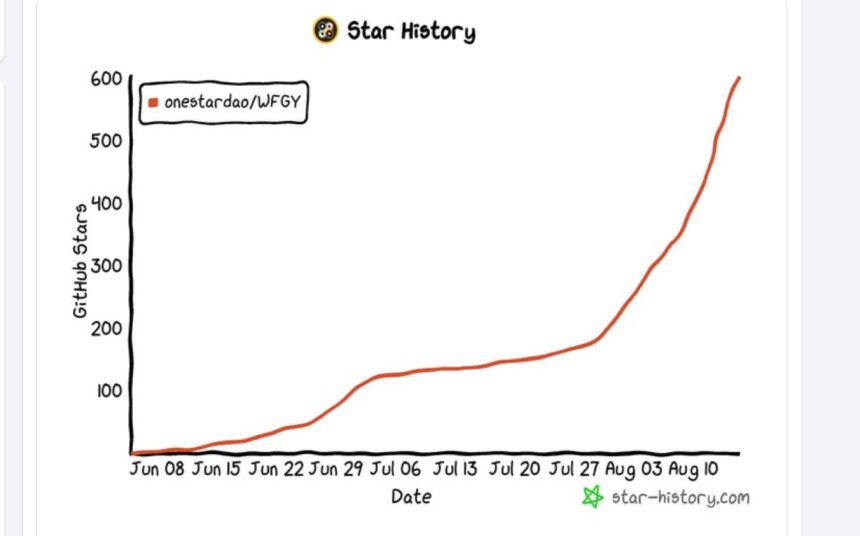
The project’s credibility is underscored by its rapid organic growth, attracting hundreds of stars on GitHub in a short span, and notably, being starred by the creator of Tesseract.js, a strong signal of its practical utility and impact.
Quickly Diagnosing Issues with WFGY
One of WFGY’s most compelling features is its ability to help you validate if your issue aligns with one of the sixteen identified problems without altering your codebase. The process is straightforward:
- Open a new chat window in platforms like GPT or Claude.
- Download the WFGY file from the core folder and attach it as a knowledge file.
- Paste the following prompt:
Use WFGY to answer my question. First answer normally. Then re answer using WFGY. Compare depth, accuracy, and stability. Rate both. If this chat is missing the WFGY file refuse to run.
If the WFGY-enhanced answer demonstrates tighter constraint adherence or visibly illustrates a recovery step, your problem likely falls within the Problem Map. You can then request the specific entry number and the minimal steps required for a fix.
The Sixteen Critical Failure Modes in RAG and LLM Systems
The Problem Map meticulously categorizes AI failures, each with clear symptoms, reproduction methods, and practical solutions. Here are the sixteen crucial failure modes:
No. 1 Hallucination and Chunk Drift
Symptoms: Fused facts from disparate sources, invented connections, overly confident assertions. Repro: Provide two short text snippets with shared nouns but conflicting temporal or entity details. Fix: Semantic residue checks and alignment procedures.
No. 2 Interpretation Collapse
Symptoms: The LLM’s task type shifts unexpectedly, or the output format changes mid-response. Repro: Request data in a table, then narration, then a table again. Fix: Implement an observation gate with layout anchors.
Further Reading: Semantic Clinic Index
No. 3 Long Reasoning Chains
Symptoms: The reasoning process stalls or loops indefinitely after a few steps, indicating a depth ceiling. Repro: Present a multi-step puzzle with a subtle, hidden constraint. Fix: Employ multi-path progression combined with bridge steps.
No. 4 Bluffing and Overconfidence
Symptoms: Generates fabricated citations, maintaining a confident tone despite inaccuracy. Repro: Demand citations for information and then verify the provided links. Fix: Apply a residue penalty with an audit flag.
No. 5 Semantic Not Equal to Embedding
Symptoms: Nearest neighbor vector searches yield semantically irrelevant results; antonyms or temporally misaligned data pass filters. Repro: Query using events from 2022 and 2023 that share common nouns. Fix: Implement query rewrite policies, ‘e’ resonance thresholds, and embedding QA.
Further Reading: Vector Store Metrics and FAISS Pitfalls
No. 6 Logic Collapse and Recovery
Symptoms: The pipeline breaks down, then falls into repetitive boilerplate responses. Repro: Insert a crucial, easily overlooked step into the process. Fix: Utilize a “collapse, bridge, rebirth” routine for safe resets.
No. 7 Memory Breaks Across Sessions
Symptoms: Multi-turn plans lose their anchor points when a new chat window is initiated. Repro: Attempt to continue a complex plan across two separate chat sessions. Fix: Implement Starter Village memory anchors and observation gates.
No. 8 Debugging is a Black Box
Symptoms: System logs indicate success, yet the synthesized output is incorrect. Repro: Achieve a 200 HTTP status code with a fundamentally flawed composition. Fix: Introduce auditable telemetry and constraint deltas.
No. 9 Entropy Collapse in Long Context
Symptoms: Repetitive phrases, looping, and a general loss of diversity in responses, especially with lengthy inputs. Repro: Provide an extremely long context and then request a fresh plan. Fix: Apply attention modulation and an entropy pump.
No. 10 Creative Freeze
Symptoms: The model refuses to attempt a creative task or resorts to generic clichés. Repro: Ask the model to blend three distinctly different concepts. Fix: Encourage head diversity and path sampling.
No. 11 Semantic Drift in Routing
Symptoms: Two semantically similar deep links are handled inconsistently by the router. Repro: Observe the router treating one link as a special intent and the other as a standard path. Fix: Implement a route normalizer and an intent guard.
No. 12 Symbolic Collapse
Symptoms: Units of measurement drift, mathematical rules are mixed incorrectly, leading to minor inaccuracies in totals. Repro: Introduce a unit change mid-chain with a hidden default value. Fix: Utilize a cross-path guard and unit normalizer.
No. 13 Multi-Agent Chaos
Symptoms: Multiple agents overwrite each other’s work, enter deadlocks, or fall into endless loops. Repro: Configure two agents to write to the same state in pursuit of the same goal. Fix: Implement position locks with a global constraint aggregator.
No. 14 Bootstrap Ordering
Symptoms: The system appears functional initially, but later steps fail without an obvious root cause. Repro: Call the retriever before the index is fully built, or a tool before its secrets are loaded. Fix: Develop a safety boundary checklist.
Further Reading: Bootstrap Ordering
No. 15 Deployment Deadlock
Symptoms: Functionality is perfect in private testing but freezes under public load. Repro: A public route triggers an asynchronous operation that waits for a private resource. Fix: Implement watchdogs, explicit timeouts, and safe fallbacks.
Further Reading: Deployment Deadlock
No. 16 Pre-Deploy Collapse
Symptoms: Empty vector stores, missing secrets, or actions triggered prematurely before setup is complete. Repro: Invoke an action before the entire setup sequence has finalized. Fix: Implement preflight sanity checks with red flag blocks.
Further Reading: Pre-deploy Collapse
A Streamlined Diagnostic Path
To prevent endless, unproductive tuning efforts, the Problem Map advocates for a direct, three-step diagnostic flow:
- First, precisely name the symptom using the provided list; resist the urge to jump directly to the root cause.
- Next, execute a minimal reproduction case: one retriever, one store, one prompt – stripping away all optional components.
- Finally, apply the minimal fix, starting with the named module and adding only what is absolutely necessary.
This disciplined approach ensures that debugging efforts target the actual failure point, saving invaluable development time.
Under the Hood: The WFGY Semantic Firewall in Plain Language
WFGY operates through a compact set of model-agnostic operators, forming an intelligent reasoning layer:
- BBMC (Big-Big Semantic Residue): Aims to reduce semantic residue to align the model’s intent with the generated tokens, ensuring accuracy.
- BBPF (Multi-Path Progression): Allows the model to explore multiple reasoning paths while maintaining a strict stability bound, preventing divergence.
- BBCR (Collapse, Bridge, Rebirth): A robust routine for safely resetting a reasoning chain when it stalls, preventing complete system failures.
- BBAM (Attention Modulation): Dampens the influence of single token “hijacks” and effectively reduces repetitive loops in output.
- Five Gates for Stability (WRI): A set of foundational checks that include:
- Where am I (WAI): A position lock for contextual awareness.
- Who am I (WAY): Encourages head diversity in responses.
- Who are you (WDT): Functions as an entropy pump to maintain diversity.
- Where did you take me (WTF): A cross-path guard to prevent unexpected shifts.
- What happened (BBCR): Incorporates collapse detection and reset capabilities.
These powerful concepts were developed directly from real-world engineering challenges identified and solved on GitHub, making WFGY a practical, battle-tested solution compatible with leading LLMs like GPT, Claude, Gemini, Mistral, and Grok.
Addressing Key Challenges in AI Development
The insights derived from the Problem Map and WFGY offer deep dives into some of the most pressing challenges:
- RAG Retrieval Quality and FAISS Pitfalls: Addresses issues where nearest neighbor searches return superficially similar but semantically incorrect results, often due to a lack of temporal logic. The fix involves query rewriting, ‘e’ resonance bands, enhanced store metrics, and time-entity guardrails.
- Prompt Injection that Slips Through Role Prompts: Tackles the problem of hidden instructions within chunks that bypass policy layers. The solution lies in modular injection rules, allow/block lists, and a bridge to isolate content from instructions.
- Multi-Agent Chaos: Explores situations where multiple autonomous agents vie for the same task, leading to state conflicts. Solutions include WRI for role position locking, a global constraint aggregator, and explicit ownership of state segments.
- Deployment Deadlock Under Public Traffic: Investigates the baffling scenario where systems work perfectly in private environments but freeze under public load. The root cause often involves background triggers awaiting private resources. Watchdogs, explicit timeouts, safe fallbacks, and comprehensive preflight checklists (as detailed in No. 15 and No. 16) are key to resolving this.
Frequently Asked Questions Answered
Many developers naturally have questions about WFGY:
- Is this just a clever prompt? No, WFGY is a compact specification attached as a file, which the model executes as a contract, visibly demonstrating recovery steps when the reasoning chain falters.
- Does it require fine-tuning? Absolutely not. It requires zero training and no alterations to your existing infrastructure.
- Will this conflict with my agent tools? No, WFGY acts as an overlay. Your existing tools remain fully functional, while the semantic firewall works to reduce drift and make failures auditable.
- What about licensing and credibility? WFGY is open-source under the MIT license. Its credibility stems from solving real-world debugging challenges, as evidenced by its strong community traction and endorsements from respected figures in the open-source community.
Conclusion
The journey towards robust and reliable AI systems is fraught with hidden challenges. Semantic drift, interpretation collapse, and multi-agent chaos are not theoretical concerns but real, time-consuming obstacles for developers. The AI Problem Map, powered by the WFGY semantic firewall, offers a pragmatic and powerful solution, transforming opaque AI failures into transparent, diagnosable, and fixable problems. By providing clear diagnostics and precise fixes, WFGY ensures that the incredible potential of RAG and LLM agents can be realized with greater stability and accuracy.
As AI systems become increasingly complex, how will we continue to adapt our debugging strategies to anticipate problems before they become critical? What new semantic challenges lie ahead in the frontier of truly autonomous agents?




![Clean Code: Functions and Error Handling in Go: From Chaos to Clarity [Part 1]](https://techtonic.xpansieve.com.ng/wp-content/uploads/2025/10/Clean-Code-Functions-and-Error-Handling-in-Go-From-Chaos-150x150.png)


