By using this site, you agree to the Privacy Policy and Terms of Use.
Accept
Sign In
TechTonicTechTonicTechTonic
Notification Show More
Font ResizerAa
  • Home Technology
    • Home 2Hot
    • Home 3
    • Home 4
    • Home 5New
  • Technology
    Technology
    Modern technology has become a total phenomenon for civilization, the defining force of a new social order in which efficiency is no longer an option…
    Show More
    Top News
    Apple Jul Announcement: What a Refresh for Macbook
    Sponsored by
    Sponsored by
    Advantages and Disadvantages of Having Smartphone
    December 8, 2021
    Top 10 Best Portable Bluetooth Speakers for Summer Fun
    December 9, 2021
    Latest News
    The Invisible Architect: Why Human Thought Drives True Automation
    October 30, 2025
    The Groundhog Day of AI: When Your Automated Content Just Can’t Get It Together
    October 22, 2025
    Unmasking AI’s Blind Spot: Why “Later” Matters for Language Model Authority
    October 20, 2025
    Beyond the Brain Drain: Why Smart People Reuse Passwords and What Actually Works
    October 15, 2025
  • Gadget
    GadgetShow More
    The History and Future of CAD in Engineering
    From Drafting Boards to Digital Minds: The Transformative Journey of CAD and Its AI-Powered Horizon
    5 Min Read
    The Seven-Step Hostage Situation You Call Onboarding
    Investigating the Onboarding Blunder: When Helping Becomes a Hostage Situation
    12 Min Read
    Why Over-Caching Can Be Just as Bad as No Caching
    Beyond Optimization: Unmasking the Dangers of Excessive Caching
    9 Min Read
    Why SaaS Pricing Pages Fail
    Decoding Disappointment: An Investigation into SaaS Pricing Page Ineffectiveness
    10 Min Read
    Turning the Compiler Into Your Co-Architect
    Architecting Software with the Compiler: Enforcing Contracts Through Type Systems
    16 Min Read
  • Posts
    • Post Layouts
      • Standard 1
      • Standard 2
      • Standard 3
      • Standard 4
      • Standard 5
      • Standard 6
      • Standard 7
      • Standard 8
      • No Featured
    • Gallery Layouts
      • Layout 1
      • Layout 2
      • Layout 3
    • Video Layouts
      • Layout 1
      • Layout 2
    • Audio Layouts
      • Layout 1
      • Layout 2
      • Layout 3
    • Post Sidebar
      • Right Sidebar
      • Left Sidear
    • Content Features
      • Inline Mailchimp
      • Highlight Shares
      • Print Post
      • Inline Related
    • Auto Load Next Posts
    • Sponsored Post
  • Pages
    • Search Page
    • 404 Page
Reading: Unseen Revolution: How Blockchain is Silently Fixing the Chaotic World of Video Game Item Trading
Share
TechTonicTechTonic
Font ResizerAa
  • Tech News
  • Gadget
  • Technology
  • Mobile
Search
  • Home
    • Home 1
    • Home 2
    • Home 3
    • Home 4
    • Home 5
  • Categories
    • Tech News
    • Gadget
    • Technology
    • Mobile
  • Bookmarks
  • More Foxiz
    • Sitemap
Have an existing account? Sign In
Follow US
  • Contact
  • Blog
  • Complaint
  • Advertise
© 2022 Foxiz News Network. Ruby Design Company. All Rights Reserved.
blockchain-use-casecs2digitalmarketgame-developmentgame-economygamingTechnologywow

Unseen Revolution: How Blockchain is Silently Fixing the Chaotic World of Video Game Item Trading

AgentKyles
Last updated: August 21, 2025 3:56 pm
AgentKyles
Share
Blockchain’s Most Underrated Real-world Use Case is Fixing Video Game Item Markets
SHARE

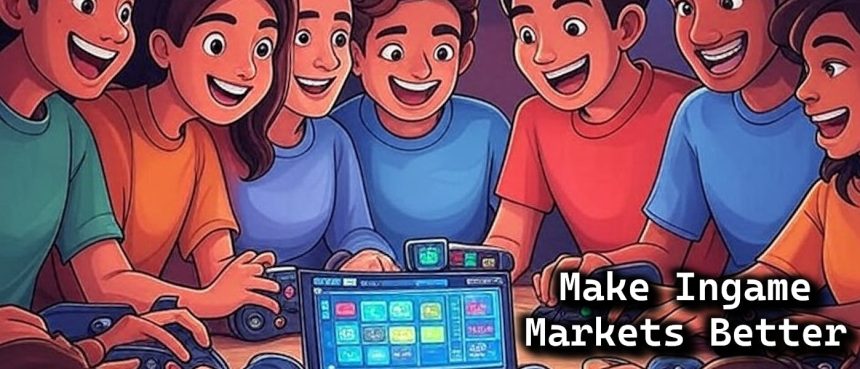
The video game industry, a colossal force projected to exceed $500 billion by 2030, dwarfs many traditional entertainment sectors. Yet, beneath its dazzling surface lies a chaotic, often unregulated, digital marketplace where billions of dollars in virtual assets exchange hands annually. From rare skins to legendary mounts, in-game items have become coveted collectibles, but their trade is rife with fraud, scarcity issues, and opaque practices. This is precisely where blockchain technology, often shrouded in speculative hype, emerges as an unassuming yet powerful solution.

Contents
The Hidden Flaws in Gaming’s Digital EconomiesBlockchain: The Invisible Engine of TrustTransforming Gaming Markets: Real-World ImpactCounter-Strike 2: From Scarcity Chaos to Verified CollectiblesWorld of Warcraft: Dismantling the Black MarketA Pragmatic Look: Opportunities and ObstaclesThe Upsides: Building a Better Digital EconomyThe Hurdles: Navigating the Path to AdoptionThe Underrated Potential: Why This Matters Now

The Hidden Flaws in Gaming’s Digital Economies

Currently, the vast economies within games like Counter-Strike 2 (CS2) and World of Warcraft (WoW) operate on centralized systems that offer limited transparency and control to players. The CS2 skin market alone is a $1 billion annual enterprise, with items like the AWP | Dragon Lore fetching five-figure sums. However, this market is plagued by a lack of verified provenance, unchecked item duplication by malicious actors, and an arbitrary supply controlled solely by developers, leading to rampant scams and distrust.

Similarly, World of Warcraft, despite its long-standing in-game auction house, faces a sprawling black market. Players often resort to illicit third-party sites to buy and sell entire accounts, characters, or large sums of in-game gold, risking permanent bans from developers like Blizzard. The core issue lies in the fact that individual items, characters, or currency stacks lack unique identifiers or verifiable ownership outside of a centralized account, making legitimate, secure trading impossible.

Blockchain: The Invisible Engine of Trust

Imagine a digital ledger that meticulously records every in-game asset’s journey—from its creation to its every trade and current ownership—making it utterly unchangeable. This is the essence of blockchain, a decentralized, distributed system often dubbed a “Permanent Record Keeper.” For gamers, this means an “uncopyable treasure chest”: your rare CS2 skin or epic WoW mount can be guaranteed authentic and truly unique.

Security is paramount, built on “Fortified Safe Box” cryptographic encryption, ensuring only the true owner can access their digital possessions. “Auto-Pilot Agreements,” or smart contracts, are self-executing codes that automatically enforce trading rules and scarcity limits without the need for intermediaries. A “Mirrored Notebook” of distributed ledgers means the system is incredibly resilient; if one part fails, the network continues, ensuring reliability. This “Open Book Accounting” allows for unprecedented transparency, making every transaction visible and verifiable, cutting through the opacity of current systems.

The true genius lies in its subtlety: players experience all these benefits—guaranteed rarity, provable ownership, secure trading—without ever needing to understand the underlying Web3 architecture. It’s technology working for the user, staying “under the hood.”

Transforming Gaming Markets: Real-World Impact

Counter-Strike 2: From Scarcity Chaos to Verified Collectibles

For CS2, blockchain transforms skins from mere digital decorations into true, limited-edition collectibles. The immutability of the blockchain ensures a skin, once created, cannot be duplicated. Smart contracts can enforce strict limits (e.g., “M4A1-S | Decimator #042 of 1,000”), guaranteeing genuine scarcity. The distributed ledger provides a complete, transparent history, or “provenance,” adding verifiable value to items that command thousands of dollars. A player investing $5,000 in a rare skin gains unparalleled peace of mind, knowing its authenticity and history are unimpeachable, eradicating the rampant scamming and uncertainty of the current market.

World of Warcraft: Dismantling the Black Market

In WoW, blockchain can legitimize and secure the trading of virtually any in-game asset. By tokenizing items, characters, and even gold as unique, numbered collectibles—like a “Swift Spectral Tiger #087 of 500″—the need for risky account sales vanishes. Players could directly and securely trade a rare sword, a high-level character, or a specific amount of gold. Smart contracts would manage these exchanges, and the transparent ledger would display every transaction history, effectively eliminating the middlemen and risks associated with black markets. This shifts power back to the players, allowing them to legally monetize their in-game achievements and possessions without fear of bans or scams, fostering a truly open and fair economy.

A Pragmatic Look: Opportunities and Obstacles

The Upsides: Building a Better Digital Economy

  1. Unrivaled Security: Leveraging cryptographic encryption, player assets are bound to unique digital keys, making unauthorized access or duplication nearly impossible. This is a fundamental shift from centralized vulnerabilities.
  2. Guaranteed Trust & Immutability: Once an item’s data is on the blockchain, it’s tamper-proof. This “Permanent Record Keeper” fosters implicit trust, crucial for high-value digital assets.
  3. Automated Efficiency: Smart contracts streamline transactions and enforce rules, reducing manual oversight and server load. This means faster, fairer trades for players.
  4. Absolute Transparency & Provenance: Every transaction history is publicly auditable, adding verifiable provenance and boosting an item’s real-world value.
  5. Scalability Potential: With robust infrastructure and advanced consensus mechanisms (like Proof-of-Stake or Layer-2 solutions), the system can support millions of transactions across diverse games, potentially globalizing markets via technologies like satellite networks.
  6. Player Empowerment: A “Shared Control System” enables direct peer-to-peer trading, circumventing black markets and offering unprecedented autonomy to players over their digital property.

The Hurdles: Navigating the Path to Adoption

  1. Significant Development Costs: Establishing and integrating blockchain infrastructure demands substantial upfront investment in computational resources and expertise, potentially slowing initial adoption.
  2. Scalability Concerns: High transaction volumes, especially in massively popular games, can strain traditional blockchain models, leading to latency and energy consumption issues, though ongoing innovations aim to mitigate this.
  3. Regulatory Ambiguity: The legal landscape for real-money trading and digital asset ownership in games remains complex and uncertain, requiring careful navigation by developers and potentially leading to policy conflicts.
  4. Developer Resistance: Convincing major studios like Valve and Blizzard to overhaul their established, revenue-generating market systems presents a formidable challenge, requiring significant buy-in and a willingness to adapt.
  5. Overhead for Smaller Games: For indie titles with fewer items or smaller player bases, the initial complexity and operational overhead of blockchain integration might outweigh its benefits, making it less practical.

Despite these challenges, the inherent promise of blockchain to create more secure, transparent, and player-centric gaming economies arguably outweighs the implementation hurdles, especially when strategically applied to maximize player benefit without exposing the underlying technical complexities.

The Underrated Potential: Why This Matters Now

The vision of blockchain in gaming markets is profoundly underrated because it transcends mere “NFT hype” to address fundamental pain points: the pervasive issue of fake items, the chaos of black markets, and the universal desire for provable ownership in a digital realm. Imagine a world where every in-game item, whether a humble CS2 skin or a legendary WoW mount, is a uniquely numbered collectible, its authenticity and history verifiable at a glance. For tech enthusiasts, it’s the elegance of decentralization and smart contract automation at work. For the everyday gamer, it’s simply a fairer, more trustworthy system for their valuable digital possessions.

The sheer scale of existing gaming markets—the CS2 skin economy alone generating billions, and WoW’s black market representing tens of millions in annual losses—underscores the urgent need for such a solution. This isn’t just a technical upgrade; it’s a paradigm shift towards empowering millions of players globally, allowing them to trade and own digital assets with unprecedented security and transparency, all seamlessly integrated into their gaming experience. This truly is an unseen revolution.

As the digital frontier of gaming continues to expand, are we ready to embrace a future where true ownership and trust empower every player, or will we remain tethered to the opaque systems of the past?


You Might Also Like

The Syntactic Seduction: Unmasking AI’s Illusion of Authority Without Truth

The Phantom Author: When AI Commands and Accountability Vanishes

Mastering Error Distinction: Building Resilient Systems with Business and Technical Exception Hierarchies

Decoding the SeaTunnel Catastrophe: How a Single Line of Code Devoured 12GB of Memory

The Enduring Soul of Gothic: Why Imperfection and Passion Outshine Modern Polish

Sign Up For Daily Newsletter

Be keep up! Get the latest breaking news delivered straight to your inbox.
[mc4wp_form]
By signing up, you agree to our Terms of Use and acknowledge the data practices in our Privacy Policy. You may unsubscribe at any time.
Share This Article
Facebook Copy Link Print
Share
Previous Article My AI-Driven GRC Toolkit: A Practical Guide to Building Intelligent Compliance Workflows The Intelligent Compliance Revolution: Unlocking Strategic Value with AI-Powered GRC
Next Article Everything We Know Right Now About Artificial, the OpenAI Movie OpenAI’s Boardroom Saga Hits the Big Screen: What We Know About ‘Artificial’
Leave a Comment

Leave a Reply Cancel reply

Your email address will not be published. Required fields are marked *

Stay Connected

248.1kLike
69.1kFollow
134kPin
54.3kFollow
banner banner
Create an Amazing Newspaper
Discover thousands of options, easy to customize layouts, one-click to import demo and much more.
Learn More

Latest News

Clean Code: Functions and Error Handling in Go: From Chaos to Clarity [Part 1]
Unmasking the Code Clutter: An Investigative Look into Go Functions and Error Handling Best Practices
backend best-practices clean-code clean-go-functions golang pass-code-review programming software-engineering
How Online Stores Know What You’ll Buy Next: The Math Behind “Frequently Bought Together”
The Algorithmic Oracle: Unpacking How E-commerce Predicts Your Next Purchase Ever feel like your favorite online store has a crystal ball, anticipating your desires before you even click ‘add to cart’? That eerie precision in suggesting “frequently bought together” items isn’t magic, dear reader, but a masterful application of data science, specifically something called Association Rule Mining. And trust me, it’s far more fascinating than any fortune teller. The core idea, stripped of its intimidating jargon, is elegantly simple: find patterns, then exploit them. Think of it as the digital equivalent of a savvy corner shop owner who knows that if you buy milk, you probably also need bread. Only, instead of one shop owner observing a few dozen customers, we’re talking about algorithms analyzing billions of transactions from millions of shoppers. The “If This, Then That” Goldmine At its heart, Association Rule Mining is about discovering “if-then” relationships within vast datasets. Computers sift through mountains of past purchase data to automatically identify rules like: “If a customer buys product A and product B, there’s an X% chance they’ll also buy product C.” These aren’t just guesses; they’re statistically significant insights derived from actual consumer behavior. This isn’t merely about throwing random suggestions at you. These algorithms employ metrics like ‘support’ (how often item sets appear together) and ‘confidence’ (how likely ‘if A’ leads to ‘then B’) to ensure the suggestions are not just correlations, but strong, reliable patterns. It’s about more than just popularity; it’s about *relationship*. From Digital Aisles to Physical Shelves The immediate application we all encounter is, of course, online. Those “Customers who bought this also bought…” or “Frequently bought together” sections on Amazon, eBay, or your local grocery delivery app? That’s Association Rule Mining in action, subtly nudging you towards complementary items, boosting the average order value for businesses, and, let’s be honest, sometimes genuinely reminding us we needed those batteries for the new gadget. But its genius isn’t confined to the digital realm. The same principles are used to optimize the physical layout of stores. Ever wondered why milk is often at the back of the supermarket, necessitating a trek past alluring displays? Or why chips and soda are frequently placed near each other? That’s often the result of this very analysis. It helps retailers organize shelves smarter, strategically placing items to maximize impulse purchases and enhance the shopping flow. Beyond the Cart: A Glimpse into the Algorithmic Future The implications of such pattern recognition extend far beyond retail. Imagine it being applied to: Healthcare: Identifying symptom patterns that frequently lead to specific diagnoses. Cybersecurity: Spotting sequences of network activities that often precede a security breach. Content Recommendations: Suggesting your next binge-watch based on your viewing history and what other similar viewers enjoyed. The ability of computers to find these hidden connections automatically from huge amounts of data empowers businesses and even other sectors to make better, more data-driven decisions. The Double-Edged Sword of Predictive Power While undoubtedly convenient, enhancing our shopping experience and making businesses more efficient, it’s worth pausing to consider the deeper implications. As these algorithms become more sophisticated, predicting our behavior with unsettling accuracy, we must ask ourselves: are these suggestions truly serving *our* best interests, or are they subtly guiding us down a pre-determined path to consume more? Are we trading true serendipity and discovery for optimized efficiency, potentially boxing ourselves into algorithmic echo chambers of preference? In a world increasingly shaped by these unseen rules, how do we ensure we remain the choosers, not just the chosen?
association-rule-mining ecommerce ecommerce-marketplace ecommerce-store frequently-bought-together item-recommendations machine-learning recommendation-algorithm
Own Your Edge: Control your AI
Beyond the Brink: Unpacking the 95% Failure Rate in Retail Edge AI and How to Own Your Edge
AI ai-edge-computing ai-infrastructure computer-vision-ai edge-ai edge-computing own-your-edge retail-ai
The Road to Hell is Paved with Good DRY Intentions
DRY Intentions, Wet Outcomes: Navigating the Over-Engineered Minefield in Software Development
design-patterns dry engineering hackernoon-top-story modular-reasoning modularity software-development yagni

You Might also Like

Technology

Apple Jul Announcement: What a Refresh for Macbook

Sponsored by
Sponsored by
Quantifying the Right-Context Boundary of Authority in Language Models
artificial-intelligencecomputational-linguisticseconomicslawlegalmachine-learningprogrammingTechnology

Unmasking AI’s Blind Spot: Why “Later” Matters for Language Model Authority

AgentKyles
AgentKyles
8 Min Read
Breaking the Bottleneck: How Symfony Messenger Handles Heavy Workloads
ai-video-generationasynchronous-programmingperformancephp-developmentsymfonysymfony-bottlenecksymfony-messengerTechnology

Unclogging the Digital Pipeline: An Investigative Look at Symfony Messenger’s Asynchronous Might

AgentKyles
AgentKyles
15 Min Read
//

We influence 20 million users and is the number one business and technology news network on the planet

Quick Link

  • Contact
  • Blog
  • Complaint
  • Advertise

Support

Sign Up for Our Newsletter

Subscribe to our newsletter to get our newest articles instantly!

[mc4wp_form id=”1616″]

TechTonicTechTonic
Follow US
© 2022 Foxiz News Network. Ruby Design Company. All Rights Reserved.
Join Us!
Subscribe to our newsletter and never miss our latest news, podcasts etc..
[mc4wp_form]
Zero spam, Unsubscribe at any time.
Welcome Back!

Sign in to your account

Username or Email Address
Password

Lost your password?

