

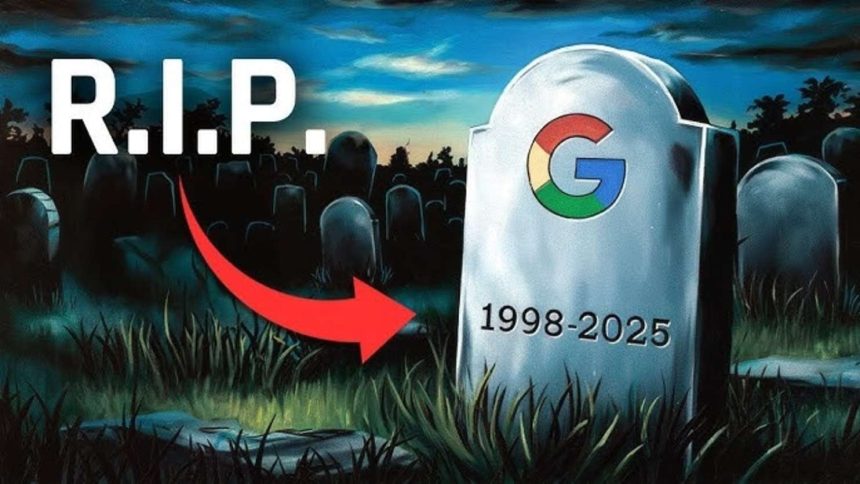
For years, the internet’s vast ocean of information meant one thing for many of us: a digital desk cluttered with browser tabs. We’ve all been there—a simple question blossoming into a frantic juggle between dozens of open pages, each holding a fragment of the answer. From news articles to research papers, blog posts to obscure forums, the traditional search journey often felt less like discovery and more like an information scavenger hunt.
This “death by browser tabs” wasn’t just inefficient; it was overwhelming. The burden fell squarely on the researcher to not only locate information but also to meticulously verify sources, synthesize disparate data, and painstakingly piece together a coherent understanding. Google, for all its immense power, presented a million options and left the heavy lifting to us.
The AI Research Assistant: A Paradigm Shift
Over the past year, my personal approach to finding information has fundamentally changed. I’ve found a new research partner in AI, specifically tools like Claude.ai. Instead of battling a barrage of search results, I now pose my questions directly to an AI assistant, and the difference has been transformative.
Imagine needing the latest statistics on AI adoption trends. The old way involved opening Google, sifting through countless links, cross-referencing figures, and praying for up-to-date data. The new way? A single, precise query:
“Please give me the current statistics from 2024-2025 on how many people now use AI to find answers vs traditional search engines. Please cite the references from trusted sources.”
Within moments, the AI delivers:
- Synthesized statistics drawn from multiple sources.
- Verifiable citations integrated seamlessly into the response.
- Crucial context that illuminates the data.
- All presented clearly and concisely on one page.
The days of “tab chaos” and the arduous task of manually collating fragments are, for my personal workflow, largely over.
Why AI Elevates the Research Experience
The benefits of this shift are profound:
- Unprecedented Speed and Efficiency: What once consumed 20-30 minutes of deep diving and organization can now be achieved in 2-3 minutes. AI doesn’t just find information; it intelligently synthesizes it, delivering precise answers without the usual digital clutter.
- Integrated, Verifiable Sources: Citations are no longer an afterthought or a manual tracking exercise. They are part of the AI’s response, making verification effortless when needed.
- Dynamic, Conversational Refinement: If an initial answer isn’t quite right, the conversation continues. It’s like having a skilled research assistant who understands nuances and adjusts their approach based on your evolving needs.
- Enhanced Comprehension: Instead of piecing together disparate explanations from a dozen articles, the AI constructs a cohesive narrative, connecting the dots and addressing the underlying question with clarity and context.
Beyond the Hype: Critical Thinking Remains Paramount
It’s important to clarify: this embrace of AI isn’t about surrendering critical thinking. AI tools are powerful, but they are not infallible. I continue to verify crucial information and delve deeper when necessary. They have simply transitioned from being a last resort to my primary starting point.
Think of it not as replacing your intelligence, but augmenting it. Traditional search engines are akin to handing you a library card and an empty afternoon, expecting you to navigate the stacks alone. AI, on the other hand, is like having a knowledgeable librarian by your side—someone who not only knows precisely where to find information but can also summarize key texts and point you to the most relevant passages.
The Undeniable Truth: Google’s Enduring Reign
Despite personal shifts and frequent predictions of its demise, the global landscape of search tells a very different, compelling story. Google Search is not merely surviving; it’s thriving.
The Numbers Speak for Themselves:
- Unrivaled Market Dominance: Google commands a staggering 89.66% of the global search engine market. As of March 2025, it handles an astonishing 91.65% of all worldwide search queries.
- Continuous Growth: Google received over 5 trillion searches in 2024, and its search volume grew by 21.64% in the same year. Estimates suggest 9.5 million Google searches occur every minute, translating to about 9.1 billion searches per day—an increase from 8.5 billion in 2024.
- AI’s Impact: While AI chatbots like ChatGPT have captured significant attention, Google still received approximately 373 times as many searches as ChatGPT in 2024. Furthermore, Google’s global traffic saw only a modest 7.91% decrease from 2023 to 2024 after ChatGPT’s introduction, indicating strong resilience.
- Robust Revenue Streams: Google’s website ad revenues hit an all-time high of $234 billion in 2024, a figure that has consistently grown year-over-year since 2001.
The Evolving Search Landscape: A Dual Perspective
The data unequivocally shows that Google Search is far from obsolete. Instead, it’s adapting to changing user behaviors, with trends like “zero-click searches” and AI Overviews shaping its evolution. Concerns about its imminent demise appear, for now, greatly exaggerated.
Yet, my personal experience underscores a significant, ongoing shift in how individuals interact with information for specific, often complex, research needs. Why would I dedicate half an hour to piecing together an answer from scattered sources when a well-organized, cited response is available in seconds?
For research, for work, for satisfying pure curiosity—AI has become my trusted default. Google remains a powerful tool, but its role in my daily information seeking has fundamentally transformed. The future of search, it seems, isn’t just about finding the best links; it’s about getting the best answers.
And once you experience that difference, is there truly any turning back from a more intuitive, intelligent approach to knowledge?




![Clean Code: Functions and Error Handling in Go: From Chaos to Clarity [Part 1]](https://techtonic.xpansieve.com.ng/wp-content/uploads/2025/10/Clean-Code-Functions-and-Error-Handling-in-Go-From-Chaos-150x150.png)


